Trash Fire
USA 2016
Written by Richard Bates Jr.
Directed by Richard Bates Jr.
Watched on 28.09.2016
In my opinion, “Trash Fire” once again proves the law of diminishing returns. For the third time now – after the brilliant “Excision” and the solid “Suburban Gothic” – writer-director Richard Bates Jr. takes on a dysfunctional family, and I have to say, it starts to get old. He seems to be one of those artists who, instead of paying for a psychiatrist, rather tries to come to terms with his issues through his work (and thus lets the audience pay for his therapy, in a way). Ok, we get it, you had a rough childhood. Could we, by any chance, move on now?
It actually doesn’t start off too bad. Granted, right from the beginning, Owen is a complete and utter asshole, but for the first couple of minutes, he’s at least a slightly charming and amusing one, with his very dark humor and his tendency for being brutally honest. However, said appeal wore off quickly, and soon enough, he degenerated from a charming to a despicable asshole for me, whom I found so insufferable that it was hard to me to understand how anyone could (and/or why anyone would) tolerate (t)his shit – let alone his attractive girlfriend, Isabel. Thus, “Trash Fire” once again features one of those couples where you ask yourself why they’re together in the first place, and actually wish for them to break up. The movie also takes far too long until they finally get to his grandma. Once there, “Trash Fire” comes to life at least a little bit more, thanks to Fionnula Flanagan’s gleefully nasty portrayal of her. And in principle, every movie which takes a critical stance towards organized religion should be right up my alley. But somehow, the religious criticism ended up being too much and overbearing even for me (preaching to the choir so loud that it starts to hurt even in their ears is no small feat). There also was not one sympathetic character in sight (no, not even Isabel, since she keeps up with the shit of both Owen and her brother). I also didn’t like the overused stylistic device of having the protagonists talking directly into the camera (not that they talk to the audience, mind you, but we’re supposed to be the person at the other and of the conversation). And when it comes to the ending, in my opinion Richard Bates Jr. tried too hard to reach a similarly shocking conclusion as in “Excision” (and failed). There, the finale seemed to be almost inevitable, but here it came out of nowhere, and didn’t really seem to fit with the rest of the movie.
Still, it’s not bad. As soon as they reach his grandma, it’s mostly entertaining. Fionnula Flanagan is absolutely great, and hands down the best thing about the movie. I liked some of the ideas. And there were a couple of funny scenes and/or great moments which I’ll remember for quite a while (can you say “rattlesnake”?). However, at least in my book, it would be high time now for Richard Bates Jr. to try something different.
4/10
The Inerasable
Japan 2015
Written by Ken’ichi Suzuki
Directed by Yoshihiro Nakamura
Watched on 28.09.2016
“The Inerasable” was ok. I liked the combination of a classic “ghost” story with the more down-to-earth approach of a journalist, I, and Kobu, a young student, trying to make sense of it all, and the subsequent investigation. For a while, that was quite interesting. Also, the first couple of minutes were really great, and a very effective short little horror story in itself. The scares were well-placed, and there were a couple of really tense moments. And the scary elements were well done, very effective, and since there were quite a few of them, also rich in variety, with the shadow creatures (and yes, I know that they weren’t really shadow creatures, but I don’t want to give their origin away) a particular standout. Those are probably going to follow me around in my nightmares for a while. Thus, for the first half or so, I found “The Inerasable” to be quite entertaining.
Unfortunately, after a promising and effective start, the movie started to overdo it a little with I’s and Kobu’s forays into the past. There’s one revelation after another about bad things going on in said house. After a while, it starts to get tedious, and even slightly unintentionally hilarious in its “But wait, there’s more!”-approach. For me, the child murderer probably would have been a good point to stop. Or they also could have skipped a couple of “generations” of evil(doings). But as it is, it got tiresome. The finale once again was nice – even though you could question their decision to actually enter said seemingly cursed house, let alone at night, but at least it gave “The Inerasable” some creepy moments close to the end. And I liked the way the movie ultimately ended – albeit it’s quite typical for this kind of film. Overall, even though it was a tad too long and should have skipped a couple of redundant revelations in order cut to the chase sooner, it was a decent enough horror flick which I’d especially recommend for fans of J-horror.
5/10
The Transfiguration
USA 2016
Written by Michael O’Shea
Directed by Michael O’Shea
Watched on 27.09.2016
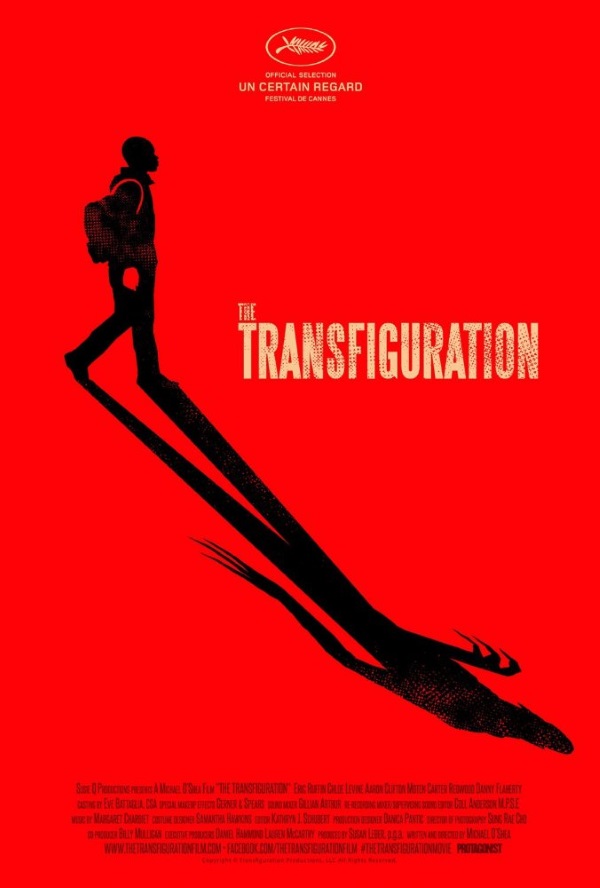
After the screening, my friend Alice summed it up perfectly in our little WhatsApp-group, when she wrote that she would have loved to like the movie more than she actually did. My thoughts exactly. I liked the basic idea, there’s a nice reference to “Let the Right One In”, the performances were very good (especially newcomers Eric Ruffin and Chloe Levine), and I was really glad that they spared us a last-minute twist, which I feared would be inevitably coming for pretty much the entire running time. So at least, there’s that.
Unfortunately, “The Transfiguration” mostly was a drag. One of my main issues with the movie was that it started off with Milo killing another guy. As much as I would like to praise this as a very brave move, ultimately I think that it was the wrong choice, at least when it comes to me. If Michael O’Shea would have introduced Milo to me before that, and made him likeable, my emotions would have been more conflicted. As it is, though, I never could get past this bloody introduction. Murdering innocent strangers who didn’t do anything just isn’t my kind of thing (I know, I’m weird that way). Thus, Milo lost my sympathy in the very first scene, and after that, the movie never enabled me to bond with him. Which made “The Transfiguration” rather boring and difficult to sit through, since it’s so clearly centered around him. It also means that I didn’t root for Eric and Sophie as a couple, even though she seemed to bring down his homicidal tendencies for a while. And I’m also not quite sure what I think of his elaborate plan at the end. Before he goes to such lengths, he might as well have tried an easier way first. I liked the short scenes that tried to explain how he ended up being that way (even though they came too late to redeem him for me), and in itself, the story and its ending are quite tragic. But without feeling any sort of connection to the main protagonist, I’m afraid “The Transfiguration” was mostly dull and exhausting for me.
3/10
I Am Not A Serial Killer
Ireland | UK 2016
Written by Christopher Hyde & Billy O’Brien
Directed by Billy O’Brien
Watched on 27.09.2016
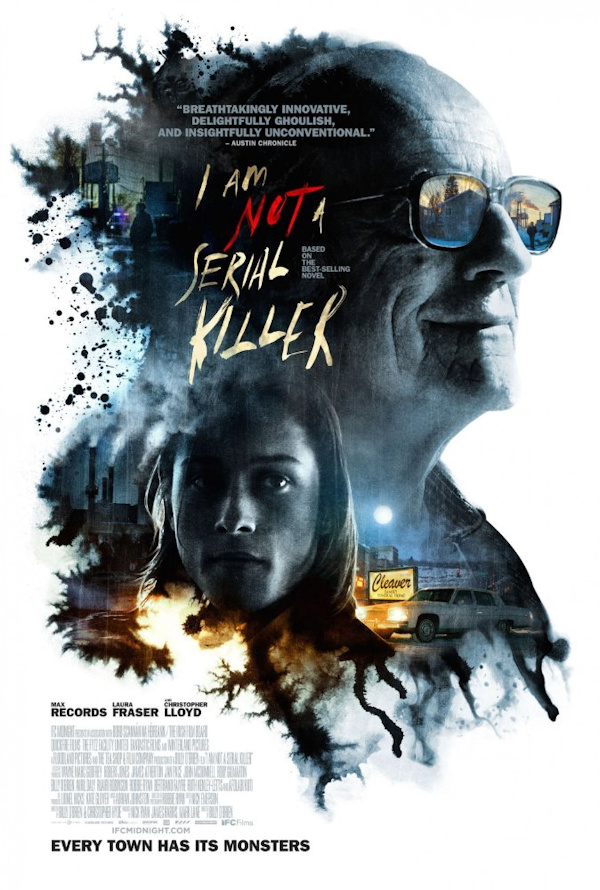
“I Am Not A Serial Killer” was entertaining enough. It wasn’t exactly a highlight, but I’ve seen far worse. And it managed to make me at least a little bit curious about the YA-novel-series that it was based on, which is always a plus when it comes to adaptations like this.
Given the fact that I went into the movie almost completely blind, the supernatural angle threw me off at first. I expected a more down-to-earth kind of thriller. However, at least said revelation came early enough to give me plenty of time to come to terms with it. I also quite liked the main protagonist. Yes, John Wayne Cleaver definitely has issues, and at first I wasn’t sure which way the story would go. But putting him into conflict with this monster ultimately forced him to deal with his problems in a way that he didn’t before, which is something that I definitely enjoyed. I also liked that they didn’t shy away from showing him as deeply troubled as they did, for fear of the audience losing its sympathy for him. Ok, granted, they did so when it comes to a certain act which would have been hard to forgive, but otherwise, they didn’t make any compromises in that regard. And I thought that it was great that John learned the identity of the killer early on, which gave this a nice “Columbo”-like dynamic – which only intensified after Crowley also figured out who was onto him, which led to a couple of quite intense moments. Christopher Lloyd gives a truly creepy, disturbing and menacing performance, and Max Records was really great too. Finally, I enjoyed the unusual way the story ended. However, overall, “I Am Not A Serial Killer” just isn’t all that special. It’s a nice, entertaining movie, with a couple of cool scenes and ideas, but it never really managed to thrill and excite me.
6/10
Darling
USA 2016
Written by Mickey Keating
Directed by Mickey Keating
Watched on 12.09.2016
Saying that I wasn’t particularly fond of Mickey Keating’s “Pod” would be the understatement of the year. For me, it was the worst movie that I ever saw at the /slash filmfestival back then (which sadly has been dethroned since then). Loud, obnoxious, and extremely annoying, I probably would have gotten up and left – despite its short running time – if I wouldn’t have had tickets for a later screening. Thus, I wasn’t especially thrilled that they included not just one, but two of his films in this year’s program.
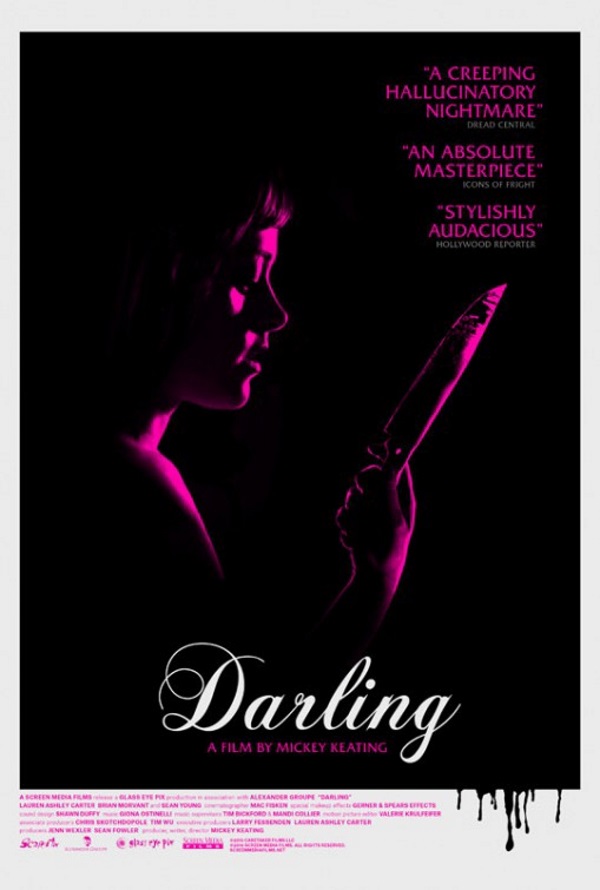
We’ll get to “Carnage Park” in a couple of days, but as far as “Darling” is concerned, the good news is that I thought it was slightly better than his previous feature. The bad news is: not by much. Yeah, it was visually (more) interesting, thanks to the lavish black and white photography (he probably would be a great DP; too bad that he insists on being a director). Also, Lauren Ashley Carter’s expressive face looks stunning in black and white. And there were a couple of tense scenes, even though those were few and far between. Otherwise, though, I found “Darling” just as difficult to sit through as “Pod”. I’m just not a fan of Mickey Keating’s directorial style, especially when it comes to his cheap jump scares as well as the extremely aggressive sound mix. Also, the story “Darling” is telling is hardly worth mentioning. It’s a jumbled mess of individual segments, some actually not too bad, others a chore to sit through (like the cleaning sequence that goes on for far too long), and some – at least for me – insufferable. And to add insult to injury, it ultimately leads nowhere, not really offering any explanation, and culminating in a finale that couldn’t have been more predictable. I still might have been able to enjoy it at least a little bit, had Mickey Keating not once again insisted on torturing the eyes and ears of his audience. As it is, though, it was yet another terrible mess that had me question all those voices who claim Mickey Keating to be the new whizz kid of horror. Because if that’s really the case, then the genre is in even worse shape than I could have imagined in all my darkest nightmares.
2/10
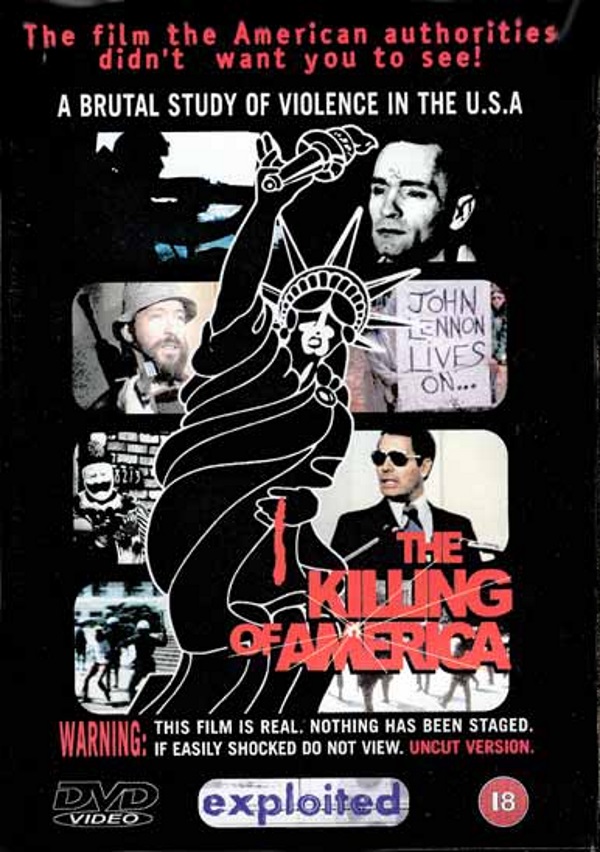
The Killing of America
USA 1981
Written by Chieko Schrader & Leonard Schrader
Directed by Sheldon Renan
Watched on 28.09.2016
Probably the most impressive as well as shocking and disturbing thing about “The Killing of America” was how it feels just as relevant, if not even more so, as it was when it was released back in the day. Maybe apart from the assassination of politicians, things seem to have gotten worse, instead of better, and there are some issues raised here – like how easy it is in the US to acquire attack rifles legally – that had me wallow in anger and despair, since there seems to have been no progress in that regard whatsoever.
The first half of the movie was especially interesting and disturbing, with its examination of the spiral of violence that seemed to clutch the U.S. more and more, following the assassination of JFK. Even more than the part about politically motivated killing of famous people, however, I was greatly disturbed by the chapter about snipers and similar amok runs, who also grew more frequent back then, and continue to do so until today. It’s shocking to realize that it would be far too easy to do some sort of sequel to this today, and the images and footage from said suicide runs were especially disturbing to me. After that, however, the movie makes a rather drastic turn, going away from (seemingly) random acts of violence to sexually motivated murders, as well as serial killers. While I understand Sheldon Renan and Leonard Schrader’s aspiration to portray the violence that held America in its grip as comprehensively as possible, it was a weird shift somehow, since it seemed to be less about how society in itself seemed to spiral into violence, and more about the specific crimes of certain individuals. It was still quite interesting and occasionally shocking, but didn’t quite reach the same heights as the first half of the movie for me. Also, I guess one has to concede that in giving these disturbed individuals a forum, “The Killing of America” also provides them with one of the things that they were striving for with their acts: Popularity, if not immortality. Thus, that aspect of the documentary is definitely questionable. However, with the murder of John Lennon and the footage of the wake in Central Park, together with his unforgettable hymn “Imagine”, which infuses a certain amount of hope, only to squash it again right away directly before the end credits roll, “The Killing of America” ends on a high note, and overall, it’s an extremely important documentary which, thanks to its unabated relevance, sadly is less of a historic document, but rather continues to be an upsetting and important wake-up call for all of us.
8/10
Creepy
Japan 2016
Written by Chihiro Ikeda & Kiyoshi Kurosawa
Directed by Kiyoshi Kurosawa
Watched on 26.09.2016
Since the screening I’ve learned that “Creepy” is actually quite well-regarded, at least with some of the international press. I wish I could agree, but the only thing that made the movie bearable, at least to some extent, was how unintentionally hilarious it was, which gave it a certain entertainment value – albeit by accident.
————— HERE BE SPOILERS —————
“Creepy” – or “The Burbs: Braindead Edition”, as I’ve come to call it – probably was the funniest film that I saw at this years /slash filmfestival – and that includes comedies like “Hentai Kamen: The Abnormal Crisis” and “The Mermaid”. Too bad that it wasn’t intended as such. It actually starts off promising enough, with a short clip about this detective, Takakura, and a killer he wants to study, who then gets loose and hurts him before being killed himself. One year later, he’s recovered, but left his old job behind in order to teach criminal psychology at a university, and he and his wife just moved to a new house. A couple of minutes later, there was a first warning sign concerning the discrepancy between what the film attempts, and the unintentionally funny effect it had on me. With complete and utter sincerity, Takakura is standing in the classroom, and tells his students that there’s three types of serial killers: The organized ones, the disorganized ones, and those that fall in between. Ehm… what? But wait, it gets better: In his own line of work, he only ever met the third type, those you can’t clearly classify. Now, I have neither studied criminology, nor psychology, let alone criminal psychology, but to me, that sounds like there only is the third kind which actually defies categorization. Granted, it’s just a small comment – but it’s exemplary for my problems with the movie: It takes itself far too seriously, and is ultimately totally incompetent when telling the story it wants to tell.
In a twist of fate which lets the young James T. Kirk coincidentally stumbling upon the deserted Spock on the uninhabited planet in “Star Trek” look totally logical and inevitable, during a break from teaching Takakura’s gaze falls upon the screen of one of his colleagues, who in his free time studies crimes. He spots one blip far from the other ones, and learns that it’s about the disappearance of a family. Wondering why such an event should be classified as a crime, he starts to investigate – which will ultimately have him find out that the killer is none other than his new neighbour from fucking next door, Nishino. Now, if that alone would have been the only silly thing about it, I might have let it go. But unfortunately, “Creepy” is full of such implausibilities and unintentionally hilarious moments. For example, he later on interrogates a witness. Apart from the fact that the way he goes about it had me ask how someone like him could ever get a degree for anything with “psychology” in the title, she starts to recall her mother talking to a stranger very often, turning away from her daughter when she spotted her, like it would be something secret. Come to think of it, around the same time her father did the same thing. So could it be that they actually talked to the same person? But wait! Around the time, her brother also suddenly started drinking, and she’s fairly certain that the one who bought the alcohol for him is the exact same person her parents were talking to. And the only thing more ridiculous than this line of thought itself is that she actually turns out to be RIGHT.
I could go on and on like that, but let’s just say: After a promising beginning, “Creepy” slowly started to unravel more and more with each and every passing minute, with a couple of scenes of stupid behavior or unintentionally funny lines where I didn’t know any more if I should laugh out loud, or cry out in despair. Like the young cop who accompanies Takakura on his investigation, who decides to check out Nishoni (after Takakura already told him that he was suspicious about him) – without telling anyone, including Takakura, what he was about to do (let alone take any backup with him). Or the moment where Takakura realizes that the setup of his and his neighbor’s house are exactly the same as from the missing family and their neighbor (what?). It went on like that, until finally, Takakura and his former boss head out to confront the supposed serial killer. While Takakura checks on his wife, his boss enters Nishino’s house on his own (backup is for pussies!) – and it was at that exact moment where I turned around to my companions, desperately holding back my laughter and saying “I can’t take this anymore!”. Add to that the scene where the daughter of his newest victim fails to use the loaded weapon in her hand to just shoot their tormentor (one might argue Stockholm syndrome, but later on, she’s happy after Takakura finally killed him, which only had me thinking “you could have had that 15 minutes earlier, saved your mum, and spared me a lot of suffering, bitch!”), or the moment where Takakura’s wife turns on him, the scene where they drive along that uses such a terrible back projection that made it look like they were using one of the flying cars from “Harry Potter”, and finally, the ridiculous scene where Nishino puts the loaded gun into Takakura’s hands, wo turns, says “This is where you fall”, and kills him. The last 15-20 minutes were a particular chore to sit through, and when the credits finally, mercifully started to roll, I simply was thankful to whoever deity you happen to believe in that it was over.
The only thing that kind of redeems “Creepy” in hindsight – and which spares it an even lower rating – is the fun that I had afterwards ripping it apart with my friends, who found it equally hilarious; which kinda made it this year’s “The Pack”. It also means that compared to a couple of other – maybe even better films, taken by themselves – it’ll stay in my mind longer, and I see me and my friends coming back and making fun of it not just for the rest of this year’s festival, but in the years to come. Which, if nothing else, will at least make it infamous and quite unforgettable for me. In itself, though, it’s a terrible movie, made barely bearable only because of the way how – and how hard – they miss their intended target, which makes it kinda entertaining, in a “watching a cinematic train wreck”-kind of way. However, since all of that was unintentional, I have a hard time giving the movie any real credit for that.
3/10
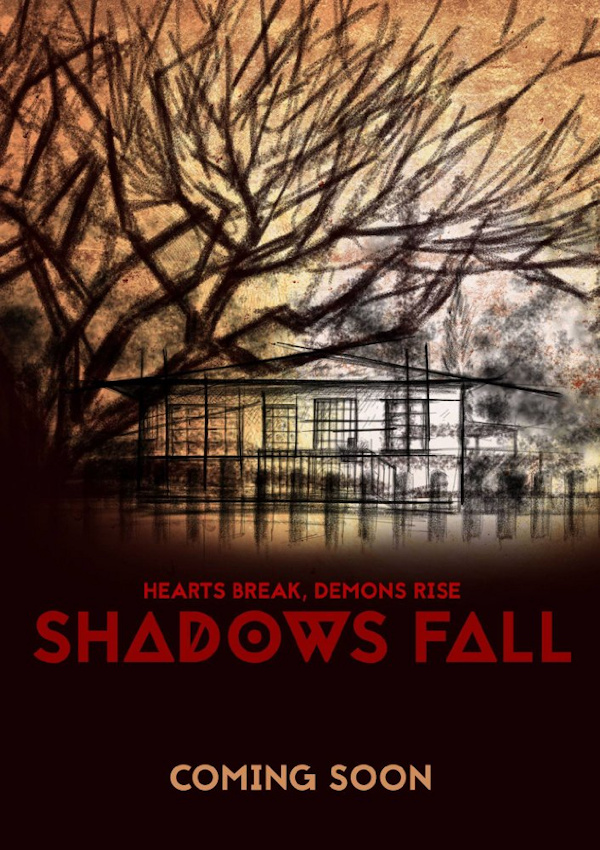
Shadows Fall
USA 2016
Written by Raj Jawa & Kuber Kaushik
Directed by Aditya Vishwanath
Watched on 19.10.2016
First of all, sorry for the unplanned hiatus. I’ll continue my slash-reviews within the next couple of days, and will then follow suit with my reviews for this years Viennale (which is already coming to an end). But before I resume my festival-reviews, I have one for a screener that was kindly offered to me by the movie’s director, Aditya Vishwanath: The upcoming indie-horror-drama “Shadows Fall”.
I have to be honest: For the first couple of minutes, I had a strong feeling that this wouldn’t be my kind of movie. “Shadows Fall” starts off extremely mysterious and erratic, with overbearing voice-over commentary and dream-like images, and for a moment, I feared that the entire movie would be this way. Thankfully, that turned out not to be the case; nevertheless, the first couple of minutes were a little hard for me to sit through. While I’m at it: It’s definitely noticeable that this is very much an independent feature. While Aditya Vishwanath’s direction is really commendable (more on that later), and the movie is very professionally shot, the lack of budget is noticeable here and there. Overall, they did a fantastic job with what little they had, but if you’re only used to high-gloss and -budgeted Hollywood fare, it will probably take a while to adapt. Also, the acting is a little uneven. While Dylan Quigg does a fantastic job in the lead role, Jener Dasilva was a little bland, and Christian Wennberg never really registered as a demonic, menacing presence for me. And after doing a great job with giving us little bits and pieces of information during the movie, the filmmakers unfortunately felt it necessary to have it all spelled out to us near the end. A little bit more trust in the ability of the audience to figure it out for themselves would have been nice.
Other than that, though, “Shadows Fall” is a very impressive effort for such an indie-horror-movie. I really liked the story, which starts to reveal itself after the first couple of minutes. After a while, you have a pretty good idea of what’s going on there, and I found that concept to be really interesting. I won’t go into it, since I don’t want to spoil the surprise – part of the fun of “Shadows Fall” is to figure out for yourself what’s going on here – but I really liked the basic idea behind it, which deals with grief, how we deal with a terrible loss, and what we would do, and give, to be with the one(s) we love. As I already said, it’s also shot really well. Granted, the directiorial style won’t be to everyone’s liking, but since I love slow motion-scenes that really draw you in, it was right up my alley. One (slow motion) shot during the middle of the movie, which gave the impression of having been shot within a single take, was especially impressive (even though there were probably quite a few cuts hidden in there, but as long as they are not noticeable, I don’t mind). The effects also were very nicely done (even though whenever I see black, moving smoke – or in this case, shadows; but it still pretty much looked the same – I always have to think of “Lost”). And when it comes to the depiction of hell, they really used their tight budget to their advantage, offering a couple of very surreal scenes that I also enjoyed very much. It all boils down to a great ending that, again, I won’t give away, but which I liked very much. Overall, I’m very glad that I got the chance to see it. If you are tolerant towards low-budget, independent features, I would definitely recommend giving this nice little romantic horror tale a chance.
7/10
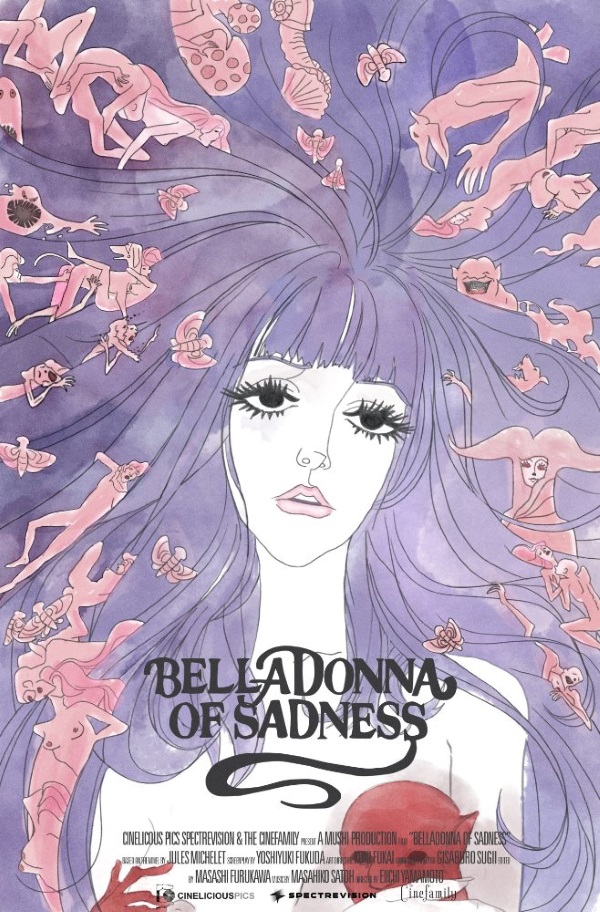
Belladonna of Sadness
Japan 2016
Written by Yoshiyuki Fukuda & Eiichi Yamamoto
Directed by Eiichi Yamamoto
Watched on 26.09.2016
“Belladonna of Sadness” offers a great tale told in a very unique animation style, and is going to stay with me for a while. My only complaint were the more surreal scenes that seem to invite substance abuse, and which started to get on my nerves a little bit the more and more the film progresses, due to their increasing rate and length. Otherwise, it’s equally beautiful, fascinating and disturbing.
The animation was absolutely beautiful. Yes, it’s noticeable – especially in the beginning – that they ran out of money, and thus couldn’t finish some sequences, instead just showing still drawings that are panned over, but they really made a virtue out of necessity. Said style, together with the great story that takes a tragic turn right at the beginning, drew me in right away. The rest of the movie is absolutely beautiful to look at, often times giving preference to rather surreal, suggestive and/or symbolic images and animations that really brought this sad tale to life. As mentioned before, I could have done without the more psychedelic scenes, which also occasionally went on for too long, but otherwise, the visuals of “Belladonna of Sadness” were absolutely stunning and unique. Same can be said about the songs and the music, which accompanied this movie really well. I especially loved the gloomy, melancholic main theme, but the rest was also beautiful to listen to. And the story was great too. “Belladonna of Sadness” tells such a sad and tragic tale, which also entails a nice, feministic message. I also loved how freely interpretable it is. Is the devil something that is brought upon us by other men? Is it something that we invite into our lives? Or is there no devil, and it’s just symbolic of Jeanna losing herself more and more? The only thing that I didn’t quite get was her ultimate decision when talking to the baron. The movie could have made it a little clearer why she (re)acts the way she does. Nevertheless, it ultimately lead to a sorrowful ending that I very much enjoyed. All in all, I’m very glad that I finally had the opportunity to watch it. Its shortcomings may prevent this from being an outright masterpiece, but the greatest tragedy of “Belladonna of Sadness” is how forgotten and overlooked it became in the intervening years – something that it definitely doesn’t deserve.
7/10
Ballad in Blood
Italy 2016
Written by Ruggero Deodato, Jacopo Mazzuoli & Angelo Orlando
Directed by Ruggero Deodato
Watched on 25.09.2016
One of the best and sometimes also worst things of the /slash filmfestival are the occasional visits from filmmakers. Best because it’s always interesting to meet the people behind the project, who often also give some interesting background information concerning a certain film. Worst because sometimes, you think they are really nice and charming, but you end up not liking their movies all that much – which makes writing said reviews absolutely no fun at all.
I have no prior experience with Ruggero Deodato’s work (no, not even the infamous “Cannibal Holocaust”), and I’m sorry to say that “Ballad in Blood” didn’t really urge me to check out his previous work. Seemingly based on the Amanda Knox-case, which created a stir internationally a couple of years back, it’s the story of a Halloween-party going extremely wrong, with three people – Lenka, Arden and Leo – who were more or less acquainted with each other, suddenly discovering the corpse of Lenka’s close friend Elizabeth. What happened? Who is responsible? In “Hangover”-like fashion, no one seems to remember, at least at first. Which, given the later resolution of what actually happened, already felt incredibly implausible to me. I mean, come on. Who would ever forget that? I mean, if maybe one of them was that intoxicated, and doesn’t recall it, ok, I’d buy that. But not all three of them. What’s worse, I didn’t care for any of them. They all seemed like complete assholes, and I even didn’t care that much about the victim, given her latent racism. [SPOILERS]Please don’t get me wrong, it of course has to be up to each and only one of us, and only us, who we want to sleep with. So I’m not saying they were right in forcing her to do so. But if you flat out refuse to have sex with a black person, I’ll have a hard time sympathizing with you, sorry [/SPOILERS]. Thus, the whole movie just dragged along, without me being interested in either what happened in the apartment, nor the aftermath. I also don’t think that the actors and actresses involved were particularly good. I’ve seen worse, but especially Carlotta Morelle to me seemed to have been cast first and foremost for her looks, and not much else. There were a couple of interesting visuals (like the location of the party), and since I’m a (heterosexual) man, the amount of bare (female) skin definitely helped to reduce my level of boredom. Nevertheless, “Ballad in Blood” just went on for far too long (even though it only has a reasonable running time of just 90 minutes anyway), and given my disinterest if not flat-out dislike of the protagonists, it ended up to be rather tiresome. And even though I freely admit that the movie marathon that already lay behind me at that time probably didn’t help, I don’t think that I would have liked it any more when seen under less strenuous circumstances.
2/10

 Trash Fire

 A life in 24 fps