Viennale 2014 – Day 4: Bird People

Bird PeopleBird People
France 2014
Written by Pascale Ferran & Guillaume Bréaud
Directed by Pascale Ferran

“Bird People” was one of the movies that kinda happened to me. Originally, I didn’t plan on seeing it, but when I made my schedule, I noticed that the movies before and after it were two of those that I really wanted to see. Since I didn’t feel like wandering around for roughly 3 hours, I thought, what the heck, and decided to watch “Bird People” too. A decision that, fortunately, I didn’t regret, since I enjoyed it more than I thought I would.

If I’d have to describe “Bird People” with one word, it would be “charming”. It is a nice little fairy tale for grown-ups that, while not glossing over the more unpleasant aspects of it, ultimately celebrates life – and the wonders that can be found. After the first 20-30 minutes that introduce us to the two main protagonists, the story unfolds as two mostly separate episodes. The first one deals with the burnout of Gary Newman, who during the first night of his stay in Paris suddenly decides to change his life completely. He misses his flight on purpose, decides to stay in Paris for the time being, quits his job, and also his marriage. The breakup-scene – via Skype – is breathtaking. It cuts really deep, and there’s a lot of truth in there. I’d assume that whoever went through a hard breakup after a long relationship will be able to relate to at least parts of it. For me, these roughly 10 minutes were the best part of the movie.

The other segment follows Audrey Camuzet, who works as a maid at the hotel where Gary is staying. And after the first 1-1/2 hours that were very realistic and down to earth, the movie suddenly takes a leap into the fantastical. I already knew what was going to happen, thus I was prepared for it, but nevertheless it was a pretty jarring transition that everyone who plans on watching the movie should be prepared for. I have to say, even though I already knew what was coming it took me a while to accept it and simply go with it, but once I did, I found it to be quite marvelous, and very entertaining. Also, those effect scenes were absolute incredibly. I have no idea how they did it, and I think I don’t even want to know. It all looked so realistic. The performances are great all around. I especially liked Anaïs Demoustier, who I found to be an incredibly charming presence. However, Josh Charles is also great. Special mention has to go to Radha Mitchell as Gary’s wife, who also gives a stellar performance.

However, there are also a couple of drawbacks. I believe that the movie is a tad too long. Even though it was not he movie’s fault, having seen “The Midnight After” a couple of weeks before, which heavily featured David Bowie’s “Space Oddity”, the scene where it’s used here lost a little bit of its appeal to me. I also found the ending to be rather disappointing. It was just far too clichéd and felt like your typical romantic comedy. I mean… [SPOILERS] of course the washed-out old american guy ends up with the cute, young french gal [/SPOILERS]. How could it be otherwise? By far the worst thing about “Bird People”, however, was the voice-over narration that tells us things about the character that we should be able to gather without this artistic device. Voice-over narration is a tricky thing to get right, and in this case, it felt like it was only there because Pascale Ferran didn’t trust his audience and/or his ability to be able to communicate what’s going on without that. The fact that the narrator reads his lines with the fervor of someone who reads an address from a telephone book obviously doesn’t help. I really wish they would have dropped that, because it ruined some of the atmosphere for me. Despite that, “Bird People” is a nice, charming and entertaining movie with a couple of marvelous scenes.
6/10
IMDB

Posted in cinema 2014, movie reviews, Viennale | Tagged , , , | 1 Comment

Viennale 2014 – Day 4: Ghesse-ha (Tales)

GhessehaGhesse-ha (Tales)
Iran 2014
Written by Rakhshan Bani-Etemad & Farid Mostafavi
Directed by Rakhshan Bani-Etemad

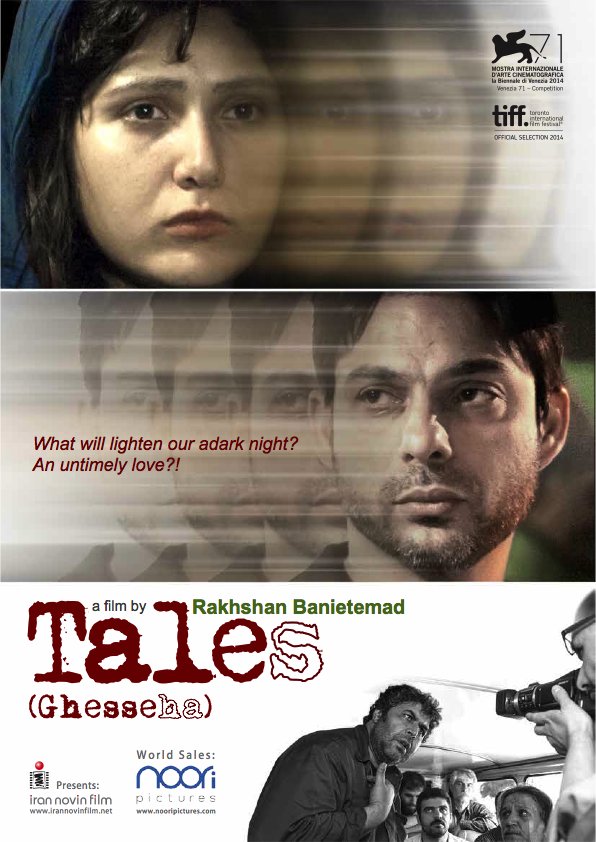
“Ghesse-ha” is another one of those movies from this years programming that I picked because they offer a window into another world – in this case, Iran. The result was one of the movies that impressed me the most at this years Viennale. Loosely connected by the story of a reporter who, after a long absence, gets back into the country to shoot a documentary, “Ghesse-ha” tells a couple of masterfully interwoven tales, thus creating a largely depressing, occasionally amusing, often touching, but always fascinating portrait of contemporary life in Iran.

It would be a crime to talk too much about each of the segments, since one of the movies main appeals is to find out again and again where Rakhshan Bani-Etemad is going to lead us next. So lets just say that the stories are sometimes very different in content and style, which makes the movie very rich in variety. Over the course of the movie, it touches on very different topics, like poverty and economic exploitation (f.e. there’s a woman who fights against the owners of a factory that stopped paying her and the other employees their loans), health care (a retiree with an health issue who seeks help from a public servant; definitely one of the lighter, funnier segments, and also ample proof that red tape really lurks everywhere), drug-abuse (with a clinic for addicted women), education/literacy (a man has to ask his wife to read a letter to him that she got from a former lover), and the oppression of free speech by the regime. By far the best segment, however, features a young woman and a young man driving in a minivan. It’s a scene that goes on for about 10-15 minutes, and during that duration, it hits so many different notes. It’s funny, sad, romantic, tragic… and ultimately culminates in a gut-wrenching ending that sent shivers down my spine. That fantastic scene alone, which ranks very high up there with the best that I’ve seen all year, was already more then worth the price of the cinema ticket. If you should ever get the chance to check out “Ghesse-ha”, I highly implore you to do so.
9/10


IMDB

Posted in cinema 2014, movie reviews, Viennale | Tagged , , , | Leave a comment

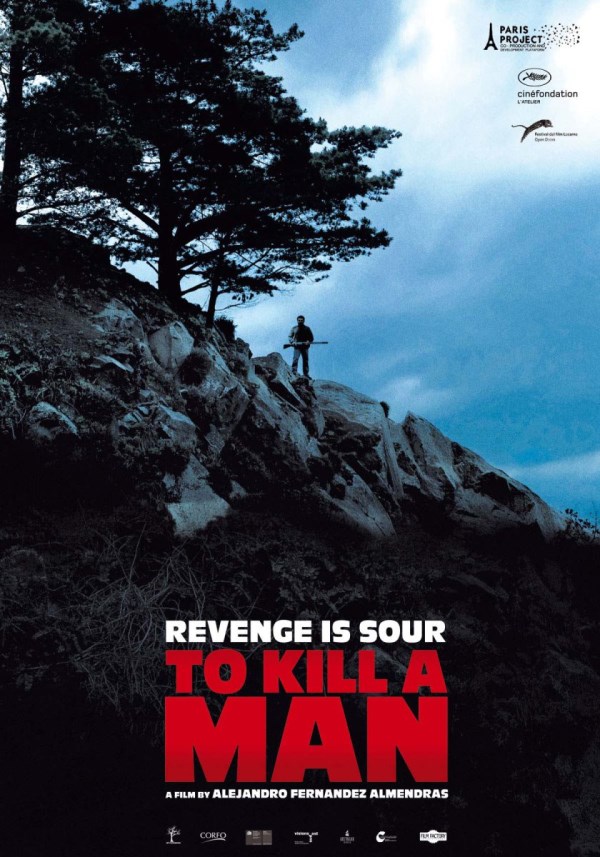
Viennale 2014 – Day 3: Matar a un hombre (To Kill A Man)

Matar A Un HombreMatar a un hombre (To Kill A Man)
Chile | France 2014
Written by Alejandro Fernández Almendras
Directed by Alejandro Fernández Almendras

Even before I sat down in the cinema to watch “Matar a un hombre”, I already regretted buying tickets for it. The reason being that a couple of days after I got all my tickets for this years Viennale, I found out that the movie was already released on DVD a couple of weeks back. If I would have known that in advance, I simply would have rented it. After the screening, I had yet another reason to regret buying tickets for the movie – because, unfortunately, I thought that it wasn’t very good.

“Matar a un hombre” is allegedly based on a true story, and while this is not one of those movies where something happens that’s so implausible that you start to doubt that label, I still think that I would have preferred a fictitious movie to this, since it all feels very restrained. I have no doubt that everything shown here could actually have taken place in real life, but I just didn’t find it very exciting, but rather felt it to be mostly dull and, ultimately, pointless. Which is a shame because I think there’s a lot of potential in the basic idea of a man getting pushed to the edge, and finally seeing no other way out than to take the life of this bully. Unfortunately, apart from a short 5 second scene where Jorge cries in the bathroom, he doesn’t really show any guilt afterwards. I also did not get the impression that he was particularly haunted by what he had done.

I also think that “Matar a un hombre” made it far too easy for us to understand him and his actions. It starts with him getting harassed, then robbed, and then his son gets shot. One year later the perpetrator is set free again, and starts harassing him and his family, throwing a brick through the window, repeatedly threatening them, and even molesting his daughter. The police seem to be totally useless. There’s a restraining order, but when Kalule doesn’t stick to it, there are no repercussions. I’m not saying that all of us would have done what he ultimately does, but I think that because of making his actions seemingly excusable, the movie loses some edge, and feels rather gutless. Now I guess it wouldn’t be so bad if they would draw us in at first, only to then pull the rug out from under our feet, but that’s the point: They never do. Or at least I never felt that they did.

Three more problems: As much as I can understand that Jorge tries to lure his victim out of his house, it felt rather contrived that no one in the neighbourhood seemed to be alarmed (or pissed off) by the car alarm going off repeatedly. He also lost much of my sympathy just out of sheer stupidity, especially when he tried to get rid of the corpse by dumping it into the ocean, dragging it to the shore for miles IN BROAD FUCKING DAYLIGHT. And – given the fact that I hadn’t got the impression that he felt a lot of remorse about what he had done – the ending of the movie came totally out of the blue for me, and thus was a total “WTF?”-moment. I just didn’t get why he did what he did there, and don’t think that the movie build up to that AT ALL.

Having said that… the acting is really good. The movie offers a nice – and bleak – look at the life in Chile (or at least a certain part of it). It was nicely shot, with the night scenes a particular standout. And the scene where he had his intended victim in the truck, and their subsequent conversation, was by far the best moment of the movie. Too bad that I couldn’t really connect with the rest of it.
3/10


IMDB

Posted in cinema 2014, movie reviews, Viennale | Tagged , , , , | 3 Comments

Viennale 2014 – Day 3: Clouds of Sils Maria

Clouds of Sils MariaClouds of Sils Maria
France | Switzerland | Germany 2014
Written by Olivier Assayas
Directed by Olivier Assayas

Before we get to the movie itself, let me start by saying that I don’t get all the hate towards Kirsten Stewart. There is this very popular internet meme that shows her in different emotional states, but it’s always the same picture – and I think it’s just vile, and mean – and moreover, completely false. I firmly believe that many people who do not like her as an actress only know her from the “Twilight”-movies, and even there I think that it’s more an (understandable) aversion against the role that she plays than against her performance. But could we please not transfer our disgust for the character unto the actress that had the (mis)fortune to play her? I dunno, maybe it’s because I’ve actually seen her in plenty of other roles (“Adventureland”, “Welcome to the Rileys” and “The Runaways”, to name but a few), but I don’t get why the internet keeps insisting that she’s terrible. Mind you, I wouldn’t call her the best of her generation, but she’s, at the very least, a decent actress.

I’m pointing that out mostly because I guess that for some, the fact that she appears in “Clouds of Sils Maria” could be a reason for them to skip it – which would really be a shame, because it’s a damn good movie. Its biggest strength in my opinion are the numerous meta-levels. First, you got the basic layer with Maria and the play “Maloja Snake”. Back in the day, when she was 18, she played the part of Sigrid, a young, sexy, up-and-coming assistant that ultimately drives her female boss Helena, with whom she has an affair, to suicide. Now, more than 20 years later, she’s asked to reappear in the play, but this time as Helena – a character she dislikes immensely, because she sees her as naive and weak. When the director of the play tells her that they essentially are the same character, but at different points in their life (which is why he pursues her to play Helena in the first place), it disturbs her tremendously, because of the implication that Maria herself, after being Sigrid in her youth, will now end up becoming just like Helena. The second meta-level features Maria and her assistant Valentine, whose relationship partially mirrors the one between Helena and Sigrid (even though they are not romantically involved in any way) – which makes the scenes where they are rehearsing together truly fascinating, because more often than not, the lines of the play also seem to apply to them. Thus, it’s sometimes actually not easy to tell where the rehearsal ends and their conversation starts. The final meta-level then reaches out into the real world. Obviously, Juliette Binoche finds herself at a similar place in her career as Maria. On the other hand, there’s Kirsten Stewart, which gives a speech about Jo-Ann Ellis (the character played by Chloe Grace Moretz) where it’s all-too-obvious that she’s actually talking about herself. All these different meta-levels make the movie a fascinating, multi-layered experience.

Another major strength of the movie is the great chemistry between Binoche and Stewart. I’m not sure if Kirsten Stewarts performance here will be enough to finally let the naysayers shut up, since she’s “just” good but not revelatory, but in either way, her Valentine is at least far removed from Bella Swan, which should help proof that her acting range is bigger than that stupid internet meme would make you believe. In any case, I found her to be really good (again), and thought that she gave a natural, convincing performance. Nevertheless, this is first and foremost Juliette Binoche’s movie, and, as usual, she shines in her role. Special mention must also go to Chloe Grace Moretz, who – after a misguided performance in “Carrie”, which I strongly believe was less her fault than the director’s – proves again to be a great talent worth keeping an eye on. I also really liked the insight that the movie offered into the work of actors and actresses. Despite some tragic, emotional and very dramatic scenes, “Clouds of Sils Maria” can also be very funny at times, for example with the movie that Jo-Ann Ellis stars in, and the discussion between Maria and Valentine that follows it. And there are some really beautiful, breathtaking images of the Alps, and overall, the movie is very well shot. Two things prevent this from becoming a masterpiece, though. Firstly, it’s a tad too long. And secondly, there’s a rather weird twist near the end that I guess is supposed to mirror something that happens in the play (even though if we take the play and apply it to the characters in the movie, this thing actually happens to the wrong person), which nevertheless felt extremely out of place for me. It also seemed to open the gates to interpretation hell, possibly even indicating a “Fight Club”-like twist that in this case would be completely nonsensical. Anyway, this scene really took me out of the movie, and left me confused and frustrated. Other than that, I have nothing but praise for it.
8/10


IMDB

Posted in cinema 2014, movie reviews, Viennale | Tagged , , , , , , | Leave a comment

Viennale 2014 – Day 3: Dólares de Arena (Sand Dollars)

Dolares De ArenaDólares de Arena (Sand Dollars)
Dominican Republic | Argentina | Mexico 2014
Written by Laura Amelia Guzmán & Israel Cárdenas
Directed by Laura Amelia Guzmán & Israel Cárdenas

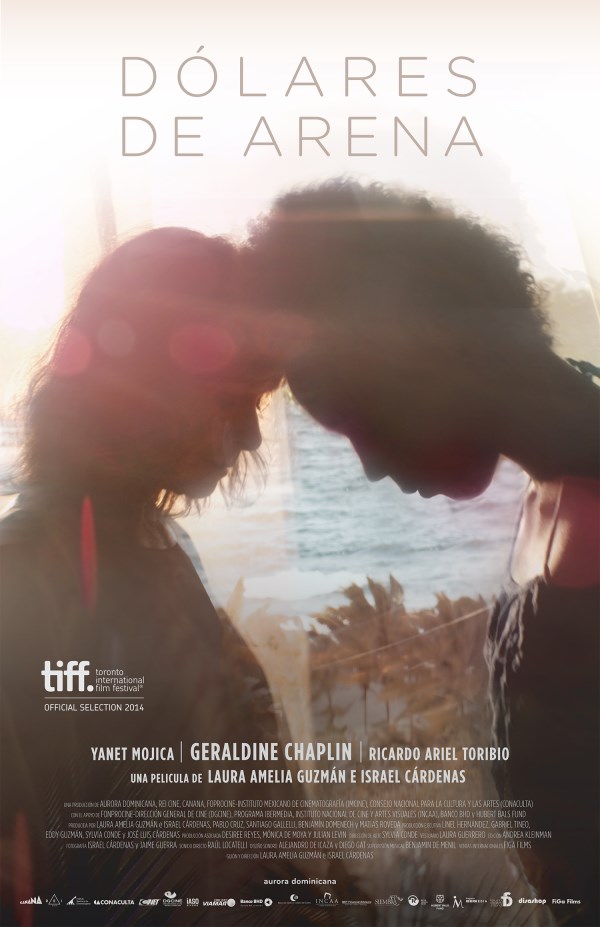
Expectation can be a bitch. While I always do my best to banish all my hopes, fears and anticipations from my mind when sitting down in the cinema seat, it doesn’t always work. I picked “Dólares de Arena” because I thought that it would be a movie about what at first glance looks like an if not impossible than at least improbable love, between an old english woman and a young girl from the dominican republic – a notion that I found quite intriguing. Unfortunately, this (mis)conception couldn’t have been further away from the truth.

Now I don’t know about you, but as tolerant and open-minded that I always try to be, whenever I see a couple with a huge age gap – which, let’s not kid ourselves, usually includes and old guy and a young girl – my mind, quite unwillingly, immediately suspects that she’s only in it for the money. Then again: Love is strange, isn’t it? So what the hell do I know? Still, it would have been nice to get a movie that actually shows such a relationship, and explains to us what they see in each other. But instead of taking these misconceptions and prejudices and showing them for what they are, “Dolares de Arena” rather confirms them, ultimately revealing that yes, indeed, the young girl only was in it for the money. What a bummer. This kinda ruined the movie for me, because I expected, and hoped for, something else, and I’d argue that actually showing them as a loving couple would have been the much more daring, exciting and unusual choice.

Because I was unsure about the nature of their relationship from the beginning, I also was never emotionally involved in it, which made the movie a rather stale affair. Also, there were so many shots that seemed completely arbitrary and pointless to me. They didn’t seem to enrichen the story and/or enhance the mood, but only prolonged the movie. I also didn’t understand what the first couple of scenes, with Noeli and the guy, were there for. In my opinion, they also could have skipped or at least trimmed the scenes with Anne and her british friend, which likewise didn’t really seem to serve any purpose. I also found it weird that they bring up the story of Anne and her son multiple times, but ultimately, neglect to actually tell it. Having said that: The dynamic between the two protagonists, even though it goes in a direction that I ultimately didn’t like, was quite interesting, the scenery was breathtaking, and the acting superb (special mention has to go to Geraldine Chaplin for her vulnerable and also brave performance, but Yanet Mojica was really great too). I just wish the writer-director-pair would have made a statement against our reservations and prejudices, instead of reinforcing them.
4/10


IMDB

Posted in cinema 2014, movie reviews, Viennale | Tagged , , , , , | 1 Comment

Viennale 2014 – Day 2: Bande de Filles (Girlhood)

(Preface: I’m sorry about the awfully long radio silence, but between work, fictionBOX, my viennale-screenings and the occasional get-together with friends and family, there simply wasn’t any time left to write reviews for this blog. I’m back now, and will provide you with reviews for the remaining 34 movies that I saw at this years Viennale over the course of the the next 2-3 weeks.)

Bande de FillesBande de Filles (Girlhood)
France 2014
Written by Céline Sciamma
Directed by Céline Sciamma

Continuing my personal “Viennale 2014”-theme of movies that offer a window into another world (figuratively speaking, and compared to the one I’m living in, of course; your mileage may wary), “Bande de filles” is about a young woman growing up in the projects in the outskirts of Paris, who gets tangled up with a female gang. It’s fascinating, engrossing, revealing, and overall a really strong film.

There are many things about “Bande de filles” that I really liked: The insights into the youth culture in France, the social problems, the dynamic within the titular girl-gang, the performances from everyone around (with Karidja Touré a particular standout), and the great electronic score. There were also many great individual scenes, like the perfect feel good moment in the hotel, set to Rihanna’s “Diamonds”. It was great to see how this frightened, oppressed and reserved girl finds her inner strength through the bond that she shares with the other girls. How they support and bolster each other. Still, it’s not all sunshine and roses. Not only do they have to defend their standing against other girl cliques, it’s also fairly obvious that as strong as they may be as a group (and against other girls), that doesn’t prevent them from still being suppressed and/or exploited by men. Having the gang as support helps, and also offers some much-needed release for their frustration, but it’s no cure-all.

The one part of the movie that I didn’t like that much were the last 20-something-minutes. There’s this one scene where they all meet up in the hotel room, and afterwards there’s a long fade to black, and I was certain that this was it, and that the movie was over. Looking back, I would have preferred it if that would actually have been the case. Instead, we get a sort of epilogue that felt tacked on, missed the dynamic of the group that made the movie so great until then, and that was rather clichéd and not very interesting. The only scene of that part of the movie that I really liked was the proposal, and Vic’s reply, but they might have well showed that earlier. Other than that, I felt that the last 15-20 minutes didn’t manage to live up to what came before, and didn’t really enrich the movie in any way. I also think that the scene before would have been a stronger ending than the one that we ultimately got. Still, the rest of the movie is strong enough to mostly make up for the slightly disappointing finish.
8/10


IMDB

Posted in cinema 2014, movie reviews, Viennale | Tagged , , | 1 Comment

Viennale 2014 – Day 2: Timbuktu

TimbuktuTimbuktu
France/Mauritania 2014
Written by Abderrahmane Sissako & Kessen Tall
Directed by Abderrahmane Sissako

We watch movies for a multitude of reasons. To escape from reality, to be entertained, to be challenged, and so on. Another reason, at least for me, is that sometimes, movies can offer a window to another world. And when I say that, I don’t necessarily mean it in a Science Fiction-context, but rather: A different time, a different country, a different culture. It only occurred to me yesterday, on my way to the cinema, that this seems to be like a golden thread that many movies that I chose to watch at this years Viennale have in common. Case in point: “Timbuktu”.

“Timbuktu” casts a glance at the titular city, and the ramifications of its occupation by militant Islamic rebels. What threw me off a little in the beginning, was the almost humorous tone of certain scenes. Maybe it was just me, but some of the earlier scenes I really found funny (some of them in a dark kind of way). I have no idea if that was the intention, or if it was just my unwanted reaction to it, but that’s the way it is. It surprised me, because I expected to see a grim, dark, depressing movie, but at first, it isn’t, or at least it wasn’t for me. This also means that when things took a darker turn later, it was a weird shift of tone for me. Again, maybe that’s just due to my unintentional reaction in the beginning, but still, it irritated me a little. I also found it to be a little long in certain parts and/or scenes, like for example Kidane’s interrogation. And I didn’t get the ending: Why were the kids running around? Why didn’t they go with the woman from before?

Apart from that, “Timbuktu” was pretty much what I wanted from it: It offered a fascinating glance at a part of our world that I’ll probably never visit, and on the fears and dangers that go along with oppression, which I hopefully never will experience myself. There were many great quotes, like the question of the believer: “Where is Allah in all this?” Or two great statements from Satima: “If you don’t like what you see, stop looking” (while her hair is uncovered), or “He who hurts women is without God.” The landscapes were equally impressive. There were many great, beautiful shots, like the one with the lake, and the two people slowly getting out at different sides of it (to say more would mean to delve into spoiler-territory). And there were a couple of truly magnificent scenes. For example: When the jihadists declare that it’s forbidden to play soccer, and confiscate the ball, they simply start playing “fantasy football”, pretending to still play with a real soccer ball. That scene was pure movie magic.

Over the course of the movie it gets to those dark, uncomfortable places that I expected pretty much from the beginning. There are some truly disturbing scenes, like the public flogging, the stoning, or the execution at the end. It also doesn’t just tell one story, but is more of a kaleidoscope of different tales, sometimes even small vignettes. With a shorter running time and a less uneven tone, this could have been a masterpiece. But even in its current form and shape, it’s still a fascinating and haunting tale of oppression.
7/10


IMDB

Posted in cinema 2014, movie reviews, Viennale | Tagged , , , | Leave a comment

Viennale 2014 – Day 1: Amour Fou

Amour FouAmour Fou
A/LUX/D 2014
Written by Jessica Hausner
Directed by Jessica Hausner

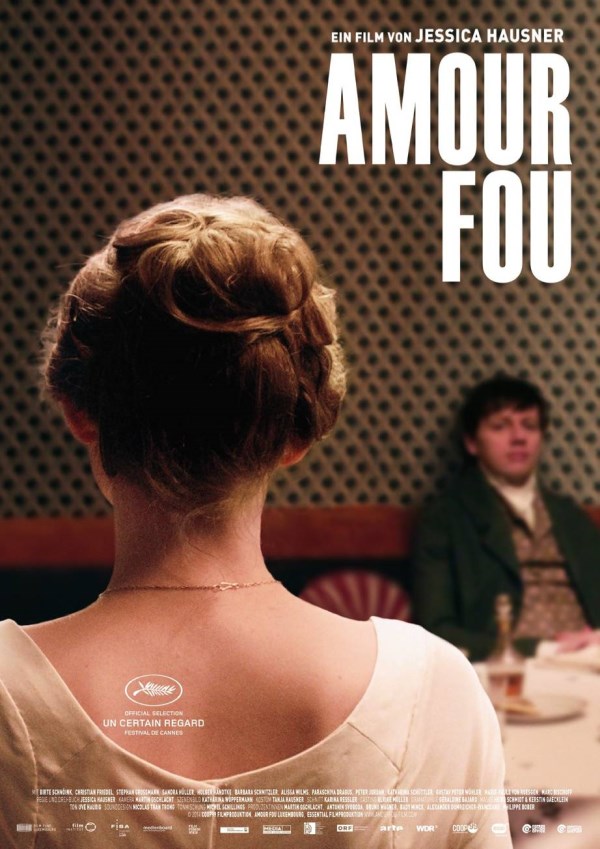
“Amour Fou” is a very weird and strange film – which is not to say that it’s bad, but that it takes some getting used to, and for some, it probably won’t be worth the effort. The very old-fashioned, sophisticated speech, the extremely polite and reserved behavior of the protagonists, the theatre-like staging, the indoor-sets… “Amour Fou” offers a window into a totally different world. Not just because it’s story takes place about 200 years in the past, but also because of its contemplation of the aristocracy of that time. Thus, it took me a while to really find into the movie.

What ultimately won me over – and also surprised me, given its subject; it deals with suicide, after all, which is still a highly risky and often hushed-up topic – was how funny it was at times. One of my favorite scenes of the movie is when Heinrich gets pissed off by a colleague of his – and he shows his distaste by rising quickly from the table and telling him, in a calm voice, that he is annoyed by him, and that he will now go to his room. And that’s it. I also liked how they used one of the tropes of romantic comedy – the bad timing – in a kinda dark way; since in this case, it wasn’t about them finally getting together, but dying together. I also liked the landscapes (few as they were), the performances of the actors (especially the three leads Birte Schnoeink, Stephan Grossmann and Christian Friedel), the sets, art direction, and the costumes.

What I could have done without: The singing. It’s not that I didn’t like those scenes at all; on the contrary, the lyrics are actually quite revealing, and relevant for the struggle of Heinrich and Henriette. But hearing one song twice and the other one even three times, was just a little bit too much. After the fourth song performance, it really started to get tired. There is also a coldness and a dispassion to the movie that, while in a way part of its charm, unfortunately also meant that the ending didn’t quite have the emotional punch that I would have hoped for. Again, it’s actually more darkly funny, than touching or tragic. Also: In a way, it was very poignant that Henriette tried to speak out, but was cut short by him; on the other hand, it made it a little bit difficult to feel for her. Why didn’t she tell him sooner? And I really could have done without the final revelation about her sickness. Ultimately, as darkly funny and thus entertaining as I might have found it, I felt myself being much more emotionally detached from it as I would have liked. Still, if you’re fascinated by this era and/or german lyricists, you should definitely check it out.
6/10

(two only slightly movie-related addendums: 1.) I found it funny how this movie worked a little bit on a meta-level for me, because of the fact that it was the opening movie of this years festival. Thus, they had two showings, the first one for invited guests only, the second one for the “common people” – which to me seemed to reflect the class distinctions present in the movie, in a weird way. 2.) One of the dancers during the evening party was my neighbour! Which kinda took me out of the movie, obviously. But it was still fun to see him pop up in such an unexpected way.)


IMDB

Posted in cinema 2014, movie reviews, Viennale | Tagged , , | Leave a comment

Goodbye /slash – Hello Viennale!

After the festival is before the festival: I just – barely – managed to finish my coverage of this years /slash filmfestival – preludes and codas and all – and today the biggest austrian filmfestival, the Viennale, starts. My plan is to release 1-2 reviews every day, starting tomorrow, but since things are getting more stressful at work (thus I’ll only take 2 days off during the festival), the fact that I’ll spend most of my spare time over the next two weeks sitting in a movie theatre, as well as my obligations for my other (german) site fictionBOX, I can’t promise that I’ll actually be able to follow my desired schedule. Anyway, whenever they’ll actually be ready, you can expect to get reviews for the following movies (in alphabetical order) over the course of the next couple of weeks:

52 Tuesdays, A Girl Walks Home Alone At Night, Amour Fou, Arrete Ou Je Continue (If You Don’t, I Will), Bande Des Filles (Girlhood), Bird People, Birdman, Buzzard, Calvary, Clouds of Sils Maria, Deo Te-Reo La-I-Beu (The Terror Live), Deux Jours Une Nuit, Dolares De Arena (Sand Dollars), Frank, Fury*, Ghesseha (Tales), Happy Christmas, Heaven Knows What, Jauja, Jigoku De Naze Warui (Why Don’t You Play In Hell?), Kuime (Over Your Dead Body), La Chambre Bleue (The Blue Room), Les Combattants, Listen Up Philip, Love Is Strange, Macondo, Matar A Un Hombre (To Kill A Man), Olive Kitteridge, Pas Son Genre (Not My Type), Phoenix, Sorg Og Glaede (Sorrow and Joy), Stimmen (Voices), Timbuktu, Time Lapse, Turist (Force Majeure), We Come As Friends, Whiplash.

* = assuming my guess for this years surprise movie is correct.

37 movies in 15 days is not quite as intense as 35 movies in 10 days (as was the case for me as this years /slash), but still, it’ll be quite a ride. Hope you’ll stick with me ’til the end!

Posted in Uncategorized | 1 Comment

Coda to /slash #5: Dawn of the Dead (1978)

Dawn of the DeadDawn of the Dead
USA/Italy 1978
Written by George A. Romero
Directed by George A. Romero

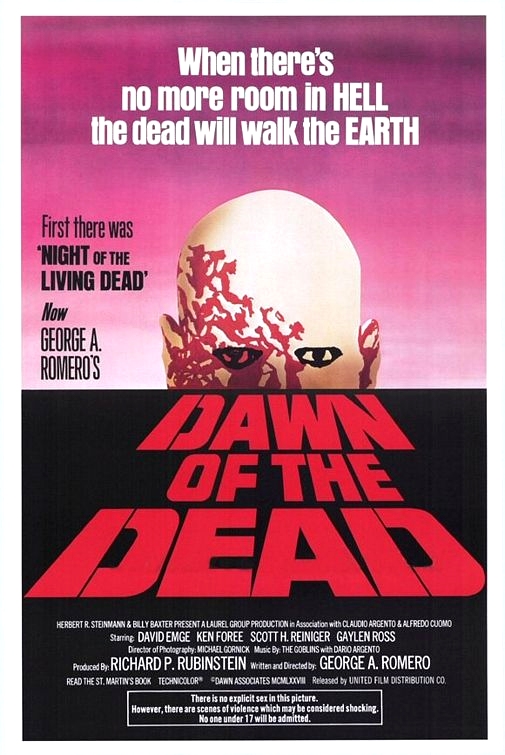
“Night of the Living Dead” was the first movie that I saw at this years horror retrospective at the Austrian Filmmuseum; thus, it also was the movie that started off this years “/slash”-seaon for me. So it’s only fitting that the last movie that I watched at the retrospective – and that now also closes my coverage of this years /slash Filmfestival – is its follow-up. I had seen this movie about 10-12 years before, but I think it was a mistake to watch the so-called “Ultimate Final Cut” (the longest one available) first, because the pacing is way off. Also, back then I simply expected something else. Something more scary and less satirical. This time, knowing what awaited me when going in, I enjoyed it much more.

“Dawn of the Dead” is considered to be George A Romero’s masterpiece, but while I really really like it (at least in its European Cut), I wouldn’t go quite that far. There are a couple of things that you can fairly criticize, I think. Like the look of the zombies. They worked great in “Night of the Living Dead” because it was black and white, but here, it’s obvious that zombie makeup effects have come a looooong way since then. The blue zombies looked especially weird to me, and overall, I didn’t find their appearance to be especially scary. I also think that the movie, even in this shorter cut than the one that I saw back in the day, takes a little bit too long to get to the mall. Some on-screen deaths didn’t quite hit me as much emotionally as I would have liked. And, like in many horror movies, there were some scenes where the actions of the protagonists didn’t seem particularly clever.

Apart from that it’s a great horror flick, though. For whatever reason, I could appreciate the satire and its commentary on consumerism much more this time around. I also think that one thing that put me off back then was that it’s more funny than scary sometimes. Scenes like them walking through the designated line on their way to the checkout – in the totally empty store – had me laughing my ass off. The only funny moment that I still don’t like, and wish they would have skipped, is the cake-throwing. It’s a little difficult to take the zombies serious as a threat after that. Other than that, the movie worked for me this time, thus I found it much more entertaining. And even though the scary moments are far and in between, there definitely a couple of really tense moments scattered throughout. What I like most about the movie, though, is its concept. This general idea of hiding in a big shopping mall during a Zombie apocalypse. It’s genius, really. You’ve got everything that you need right there.

However, as with almost every paradise, it doesn’t last forever. There are those out there who begrudge them their “home”, and want a slice of it. As aggressive and despicable as those attackers might be, however, it bears noticing that the mayhem only really starts when Stephen comes out of hiding and decides to “defend” their home, instead of just riding it out. If he would have just kept quiet, they might have been able to clean up and hide again – at least until the next raiding party came around. Instead, it all went straight to hell. It’s very interesting because Stephen starts off like this useless wimp, then – thankfully – grows over the course of the movie as a person, learning to defend himself and the others. But ultimately, he’s overcompensating for his previous behavior, and in the end, his progression to a more “manly man” is what proves to be their downfall. I also really loved the dynamic between these characters – the pregnant woman, her boyfriend and those two hard-bitten cops – and the way it progresses during the course of the movie.

Overall, “Dawn of the Dead” is a very entertaining zombie movie that comes with a bite, and that offers more social criticism and satire – and thus a lot more food for thought – than your regular brainless horror flick.
8/10


IMDB

Posted in cinema 2014, movie reviews | Tagged , , , | Leave a comment